5 Principles of Mental Capacity Act: Simple UK Guide to the MCA 2005 Explained (With NHS Examples)

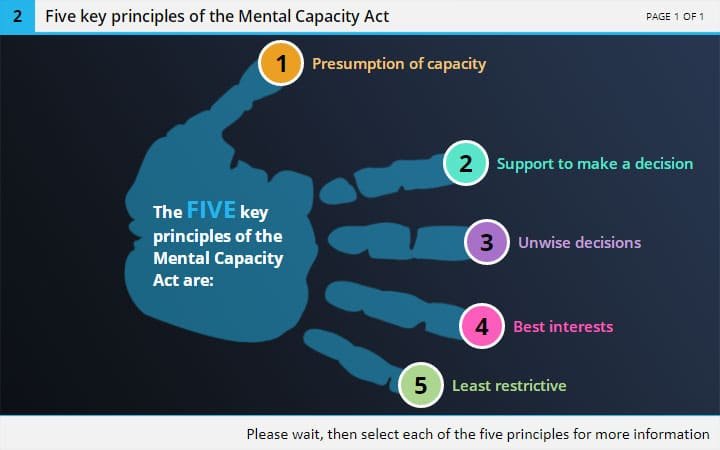
The Mental Capacity Act 2005 is a cornerstone of UK law that provides a structured framework for supporting individuals who may struggle to make certain decisions independently. It ensures that decisions are made fairly, legally, and with respect for personal dignity. The 5 principles of mental capacity act form the foundation of this legislation and guide all assessments of capacity in health and social care settings across the UK.


Understanding the 5 principles of mental capacity act is essential for professionals, carers, and even families involved in decision-making support. These principles ensure that individuals are not unfairly judged or restricted, and that every effort is made to support independence. The Act is widely applied within the NHS and social care systems to safeguard vulnerable adults while promoting autonomy and human rights.
What Are the 5 Principles of the Mental Capacity Act?
The 5 principles of mental capacity act are legal guidelines that determine how capacity should be assessed and how decisions should be made on behalf of individuals who may lack it. These principles ensure consistency, fairness, and respect in all care-related decisions. They are central to how professionals approach complex situations involving vulnerable people in the UK.
In simple terms, the 5 principles of mental capacity act uk help professionals decide whether someone can make a specific decision at a specific time. They are not designed to remove rights but to protect them. These principles are used across hospitals, care homes, and community services, ensuring that individuals are supported appropriately while maintaining as much independence as possible.
Presumption of Capacity
The first principle of the 5 principles of mental capacity act is the presumption of capacity, which means every adult must be assumed capable of making their own decisions unless there is clear evidence otherwise. This is a fundamental legal safeguard that prevents discrimination and ensures people are not unfairly judged based on illness, appearance, or disability.
In practice, the presumption of capacity within the 5 principles of mental capacity act requires professionals to start every assessment with a positive assumption. Only when there are genuine concerns should a formal assessment be carried out. This principle is essential in the NHS and social care because it protects individual rights and ensures that autonomy is always respected from the outset.
Right to Make Unwise Decisions
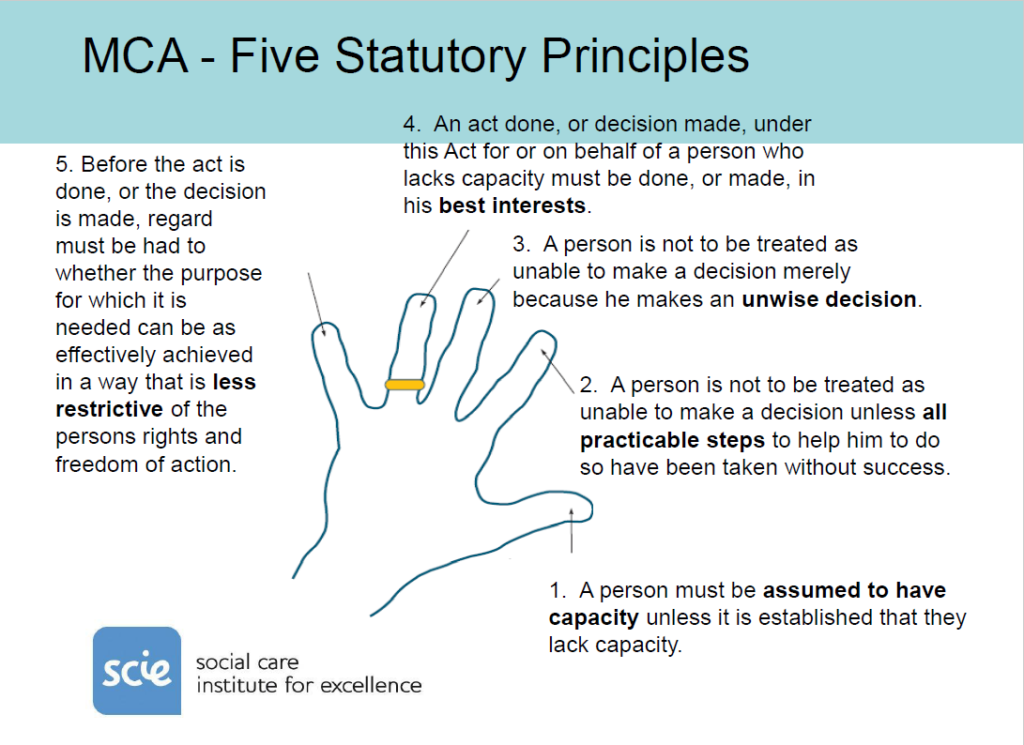
Another important aspect of the 5 principles of mental capacity act is the recognition that individuals have the right to make decisions others may consider unwise or risky. This principle ensures that people are not labelled as lacking capacity simply because they make choices that differ from professional or societal expectations.
The 5 principles of mental capacity act explained clearly highlight that unwise decisions do not equal incapacity. A person may choose to refuse treatment or take risks, but as long as they understand the consequences, their decision must be respected. This principle protects personal freedom and prevents unnecessary interference in a person’s life choices.
Supporting People to Make Decisions
The 5 principles of mental capacity act 2005 place strong emphasis on supporting individuals to make their own decisions wherever possible. This includes using communication aids, simplified information, interpreters, or involving trusted individuals to help explain choices clearly and effectively.
Support is a legal requirement under the 5 principles of mental capacity act, and professionals must take all reasonable steps before concluding that someone cannot decide for themselves. This principle ensures inclusivity and fairness, especially in healthcare environments where communication barriers may otherwise prevent full understanding.
Best Interests Decision Making
When a person is assessed as lacking capacity, the 5 principles of mental capacity act require that any decision made on their behalf must be in their best interests. This involves considering their past and present wishes, feelings, beliefs, and values, as well as consulting with family and professionals.
The best interests principle within the 5 principles of mental capacity act summary ensures that decisions are not made based solely on clinical judgement. Instead, it requires a balanced and person-centred approach. This helps protect individuals from inappropriate or overly restrictive decisions while ensuring their welfare remains the priority.
Least Restrictive Option
The least restrictive principle is a key part of the 5 principles of mental capacity act uk, ensuring that any action taken interferes with a person’s rights and freedoms as little as possible. Even when someone lacks capacity, they should still be given as much independence and choice as they can safely manage.
In practical terms, the 5 principles of mental capacity act nhs guidance encourages professionals to explore all alternatives before imposing restrictions. This might include adjusting care plans, offering community support, or using assistive technology. The aim is always to balance safety with personal freedom and dignity.
Application in NHS and Social Care
The 5 principles of mental capacity act are widely applied across NHS services, care homes, and community health settings in the UK. Professionals such as doctors, nurses, and social workers rely on these principles to guide assessments, treatment decisions, and safeguarding procedures on a daily basis.
In real-world practice, the 5 principles of mental capacity act explained help ensure that care decisions are consistent and legally compliant. Training and awareness are essential so that staff can apply the principles correctly. This reduces the risk of poor decision-making and ensures individuals receive fair, respectful, and lawful care.
Conclusion
The 5 principles of mental capacity act provide a vital framework for protecting individuals while promoting independence and dignity. They ensure that every decision is made fairly, with respect for personal rights and legal safeguards. These principles are essential across all areas of UK health and social care.
Ultimately, the 5 principles of mental capacity act summary shows that the law is designed not to restrict people, but to empower them wherever possible. By following these principles, professionals can ensure ethical, consistent, and person-centred care that respects both safety and individual choice.